
Brooklyn and beyond
Where Breakara Works
Brooklyn is built in belts, and each one changes the job. Row houses, walk-ups, two-family homes and detached lots all behave differently once the work starts.
We come to you anywhere in Brooklyn
Tell us the street and the building and we will tell you what the job involves.
Brooklyn is not one kind of building
People talk about the borough as though it were a single place, and for this trade it is not. The difference between a Park Slope row house and a Marine Park detached home is not a matter of neighbourhood character. It changes how material gets out, what is behind the walls and how long the work takes.
So rather than list every neighbourhood, here is what actually differs, belt by belt. Find the one your building sits in and you will know most of what your job depends on.
The belts, and what each one means
Find the one your building sits in and you will know most of what your job depends on.
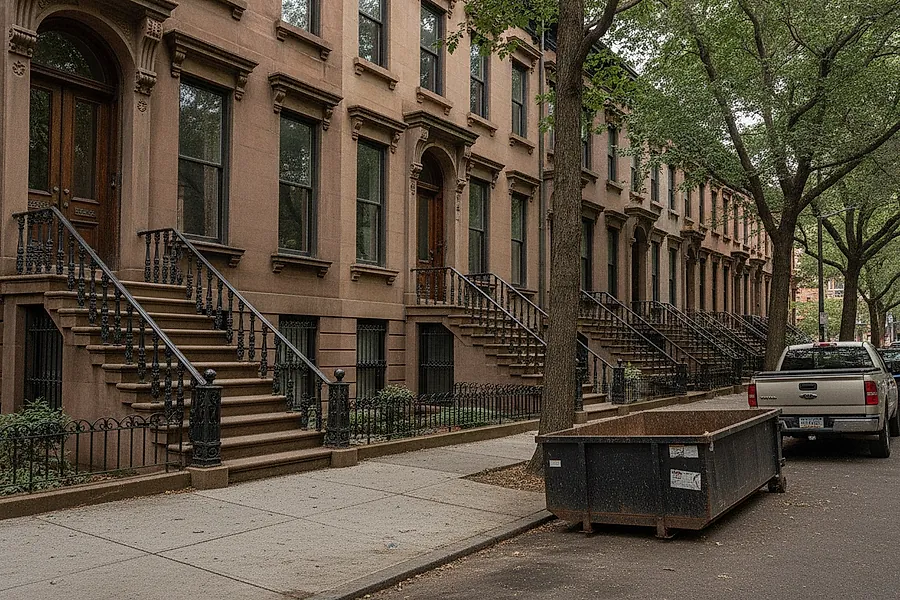
The row house and brownstone belt
Brooklyn Heights, Cobble Hill, Carroll Gardens, Boerum Hill, Park Slope, Fort Greene, Clinton Hill, Bed-Stuy, Crown Heights and Stuyvesant Heights. Narrow, attached, mostly prewar. Party walls and front facades are the two things that shape the work.
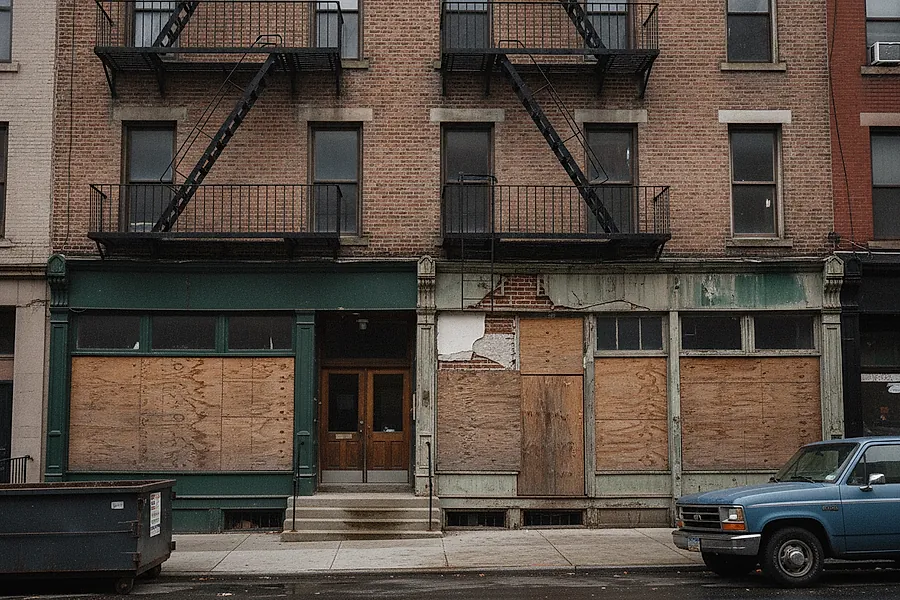
The prewar walk-up belt
Williamsburg, Greenpoint, Bushwick, Sunset Park, Bay Ridge and Borough Park. Apartment buildings with no elevator, often with retail underneath. Everything is carried down the stairs and past somebody's front door.
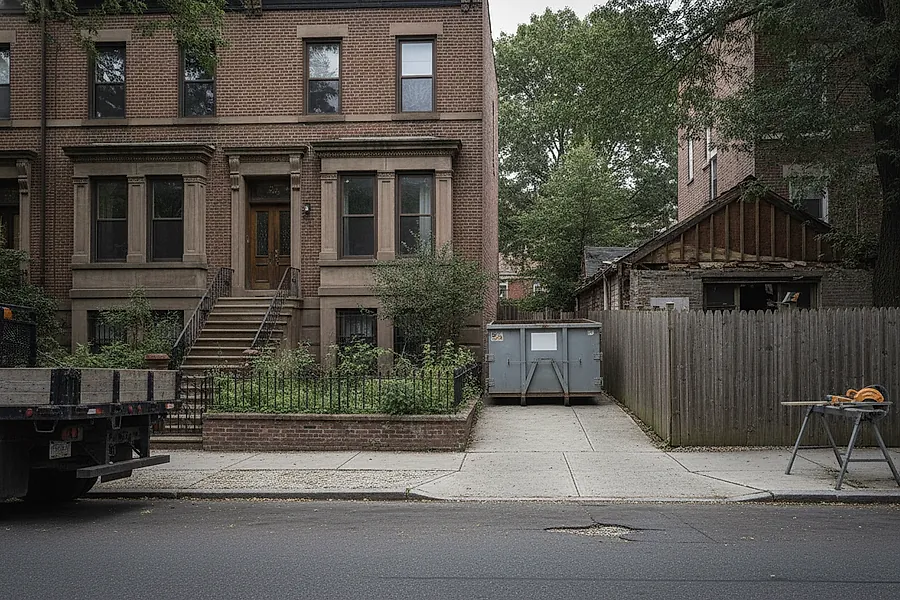
The detached and semi-attached belt
Flatbush, Ditmas Park, East Flatbush, Midwood, Canarsie, Marine Park, Mill Basin and Dyker Heights. The part of Brooklyn where side access and driveways are common, which changes what is possible on a lot.
What the borough is made of
These are the measured conditions behind everything on this page.
52%
built before 1930
Anything from that era is plaster over timber lath. It is heavier than drywall, it breaks into dust rather than sheets, and it hides whatever previous owners did.
68%
of lots 25 feet or narrower
Which is why the front door tends to be the only way out. On most blocks there is no alley, no driveway and no rear gate.
63,000
walk-up apartment buildings
Walk-ups. The stairs are the loading route, and on a fourth floor that is a substantial part of the work.
42
historic districts
Designation governs what can be done to the outside of a building. Worth checking your block before you plan anything to the facade.
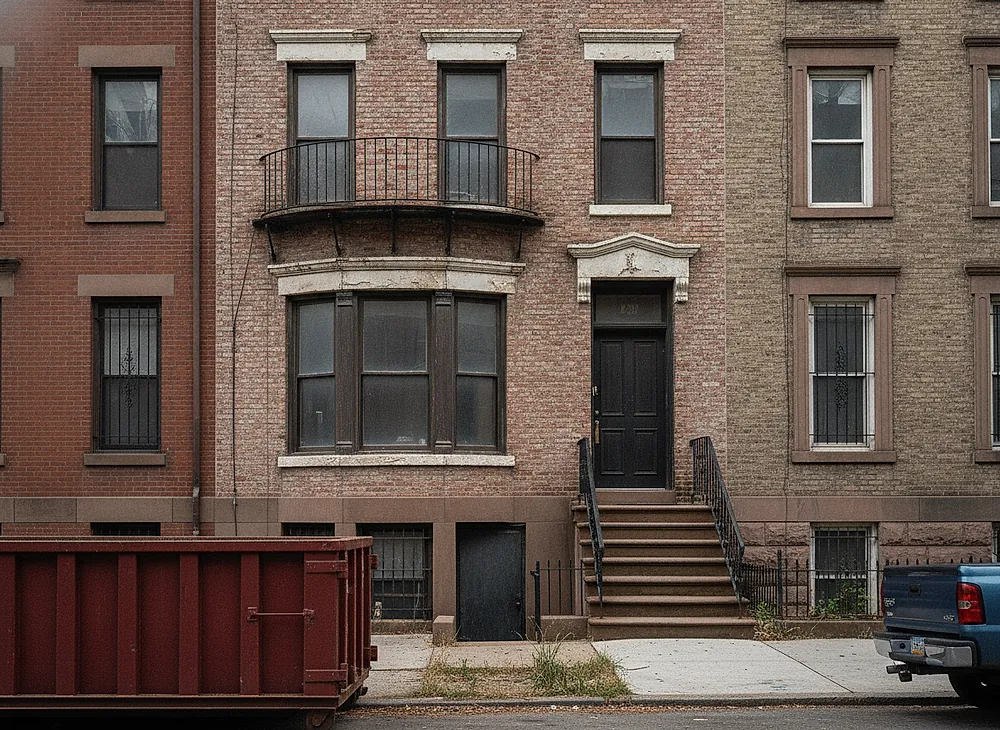
Why the age of your building matters more than its address
More than half the borough went up before 1930. In that stock the walls are plaster on timber lath, the stairs are narrow, the hallways are tight and the doorways are smaller than modern ones.
Every one of those facts affects how the work runs. The plaster decides the weight. The stair decides the sequence. The doorway decides how big a piece of concrete can be.
It is why our first question is usually about the building rather than the room. Two identical kitchens in two different buildings are two different jobs, which is most of what decides the cost.
Tell us the street and the building
The belt it sits in tells us most of what the job involves.
If your block is landmarked
There are 42 designated historic districts in Brooklyn, and several of the best known residential areas sit inside one. Brooklyn Heights was designated in 1965, Cobble Hill in 1969, Stuyvesant Heights in 1971, and Park Slope, Carroll Gardens and Boerum Hill all in 1973.
Inside a district, work affecting the exterior of a building is governed separately from ordinary building rules. That is a fact about your property rather than about the work, and establishing it early is worth doing because it shapes what is possible.
Interior work is a different matter. Tell us what you know about your building and we will factor it in.
Areas we cover
Breakara works right across Brooklyn, and in the rest of the city listed below.
Brooklyn is one of five. The same company works right across New York City.
Tell us where the building is
The street, the building type and what is coming out. That is enough to start.